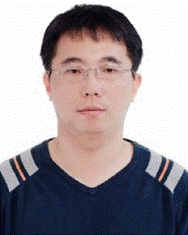
Dr. Dae-Ki Kang is a distinguished Professor at Dongseo University, South Korea. He previously served as a senior member of the engineering staff at the Electronics and Telecommunications Research Institute (ETRI), South Korea. He earned his Ph.D. in Computer Science from Iowa State University in 2006. His research interests include Multi-Agent Reinforcement Learning, Hyperparameter Optimization and Network Architecture Search, Automated Machine Learning, Adversarial Machine Learning, and data mining-based intrusion detection.
Prior to his doctoral studies, he gained industry experience working at startup companies in the San Francisco Bay Area and at ETRI. He holds a Master of Science degree in Computer Science from Sogang University (1994) and a Bachelor of Engineering degree in Computer Science and Engineering from Hanyang University (ERICA Campus) (1992). Professor Kang has authored over 50 publications including books, book chapters, and SCI journal papers, along with more than 60 journal papers indexed in SCOPUS and KCI. He serves as an editor for several SCI journals such as CMC, Applied Sciences, Sensors, Electronics, and Symmetry. He is also actively involved in international standardization as an editor for ISO/IEC JTC 1/SC 27, ITU-T SG 17, and IEEE 3079. In addition, he has contributed significantly to international conferences as a chair, keynote speaker, and invited speaker at events such as ICCSTEC, CENIM, and IHCI.
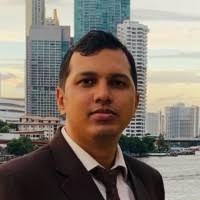
Debaditya Roy is an Assistant Professor in the Department of Computer Science and Engineering at the Indian Institute of Technology Kharagpur. His research focuses on computer vision, machine learning, and neurosymbolic AI, with applications in action anticipation and video understanding. He was previously a Senior Scientist at A*STAR, and a postdoctoral researcher at Nihon University under the M2Smart project. He completed his PhD at Indian Institute of Technology Hyderabad, where his work focused on representation learning for action recognition.
His research contributions span human activity recognition, action anticipation, video understanding, visual reasoning, and federated learning with publications in leading AI and computer vision venues such as WACV, NeurIPS, and IJCV. He is an ANRF-PMECRG 2026 grant awardee and his work has been supported by competitive international collaborations and funded projects, including the JICA-JST M2Smart project in Japan. He actively contributes to the research community through peer review, earning recognition as an outstanding reviewer at CVPR 2025 and WACV 2025.
EIC School, Tecnológico de Monterrey, Mexico
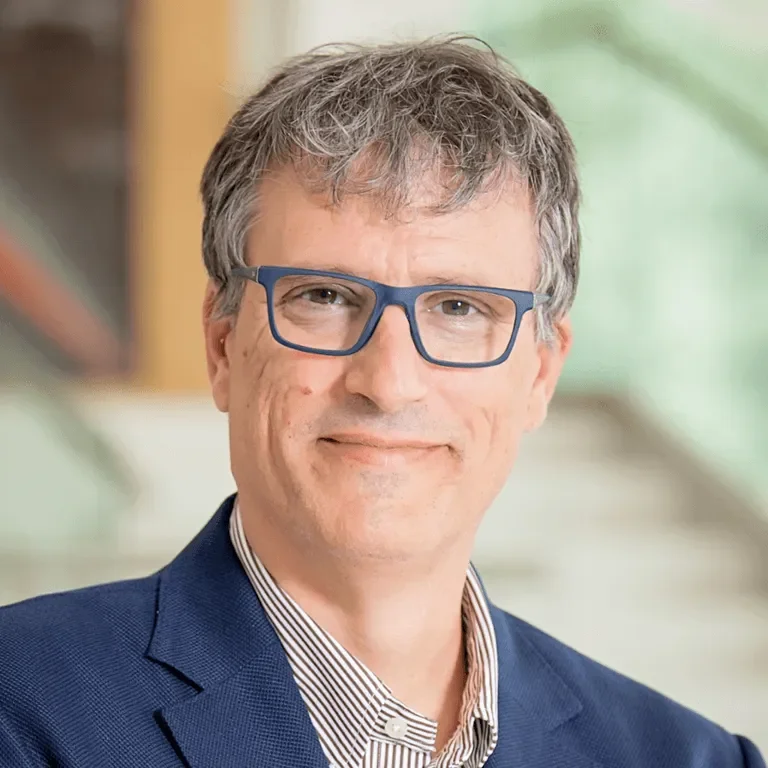
Dr. Francisco Falcone is a Telecommunications Engineer (1999) and Doctor in Communications (2005), both from UPNA. From 1999 to 2000, he worked as a Microwave Network Engineer at Siemens-Italtel, Málaga, and from 2000 to 2008 as a Mobile Access Network Engineer at Telefónica Móviles in Pamplona.
In 2009, he co-founded Tafco Metawireless, a spin-off of UPNA. Concurrently, from 2003 to 2009, he served as an Assistant Lecturer in the Department of Electrical and Electronic Engineering at UPNA. From June 2009 to August 2022, he was an Associate Professor, and since September 2022, he has been serving as a Full Professor. He is also affiliated with the Institute of Smart Cities (ISC)-UPNA and has been Head of the Institute since May 2021.
Since June 2022, he has been a Distinguished Visiting Professor at the Telecommunications School of Engineering and Science, Tecnológico de Monterrey, Mexico. His research focuses on Applied and Computational Electromagnetics, including device and system-level design for context-aware and cognitive wireless communication systems. He has participated in over 110 publicly and privately funded research projects.
University of Teramo, Italy
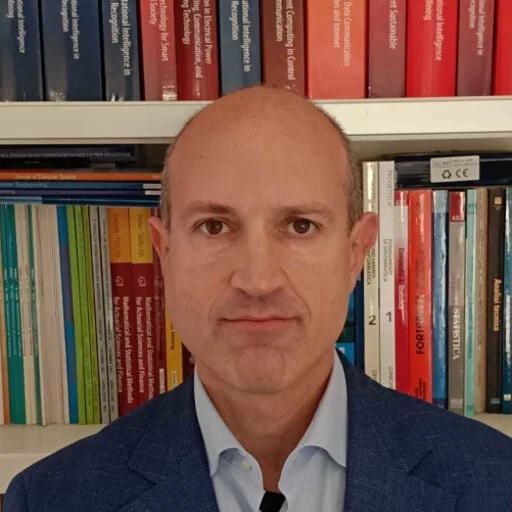
Dr. Danilo Pelusi received his degree in Physics from the University of Bologna (Italy) and a Ph.D. in Computational Astrophysics from the University of Teramo (Italy). He is currently a Professor of Computer Science at the Department of Communication Sciences, University of Teramo.
He serves as Associate Editor for several prestigious IEEE journals, including IEEE Transactions on Emerging Topics in Computational Intelligence, IEEE Access, IEEE Transactions on Neural Networks and Learning Systems, IEEE Transactions on Intelligent Transportation Systems, and IEEE Transactions on Fuzzy Systems. He has also contributed as a Keynote Speaker, Guest of Honor, and Chair at various IEEE conferences.
Dr. Pelusi is an inventor of international patents in Artificial Intelligence and has been recognized among the World’s Top 2% Scientists (2021–2024) and in the Top 0.5% ScholarGPS rankings (2024). His research interests include Fuzzy Logic, Neural Networks, Information Theory, Machine Learning, and Evolutionary Algorithms.
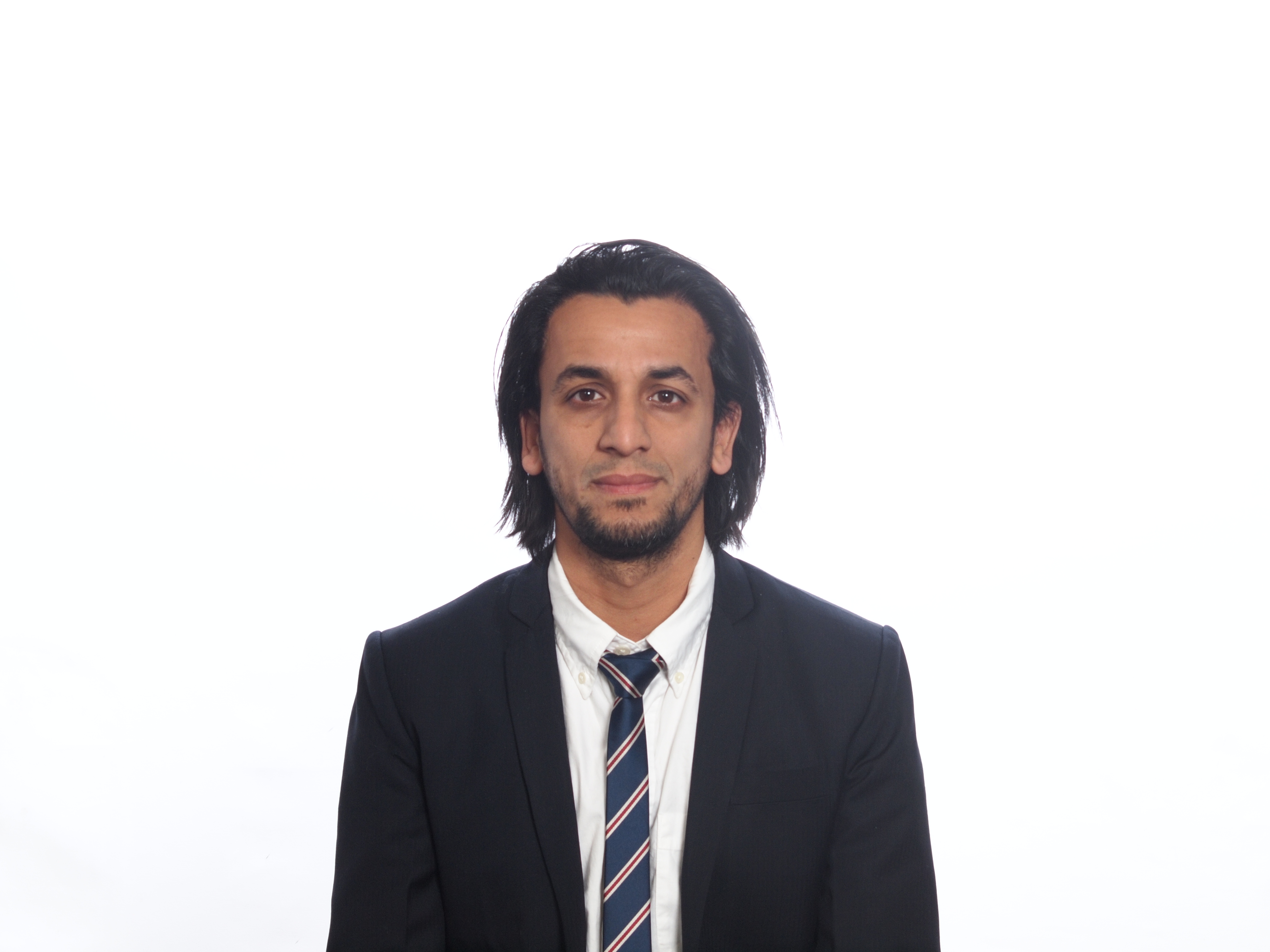
Ashay Mohile is a cybersecurity and network infrastructure expert with over five years of experience driving innovation in large-scale security systems. He currently serves as a Technical Program Manager at Meta, where he leads critical infrastructure security initiatives that support global-scale platforms. Prior to Meta, he played a key role at Palo Alto Networks in launching industry-leading next-generation firewall products, including the world’s fastest firewall delivering 1.5 Tbps throughput.
Ashay’s expertise spans Zero Trust architecture, AI security, cloud security, and high-performance network systems. He contributed to developing advanced security solutions such as AI-driven threat protection platforms and led cross-functional programs across engineering, product management, and security teams.
He holds a Master’s degree in Electrical Engineering from San Jose State University and maintains multiple industry-recognized certifications, including CISM, AWS Certified Solutions Architect, and PCNSE. A Senior Member of IEEE, Ashay has presented at international conferences and is recognized for his significant contributions to cybersecurity innovation.
Technical Co-Sponsors